
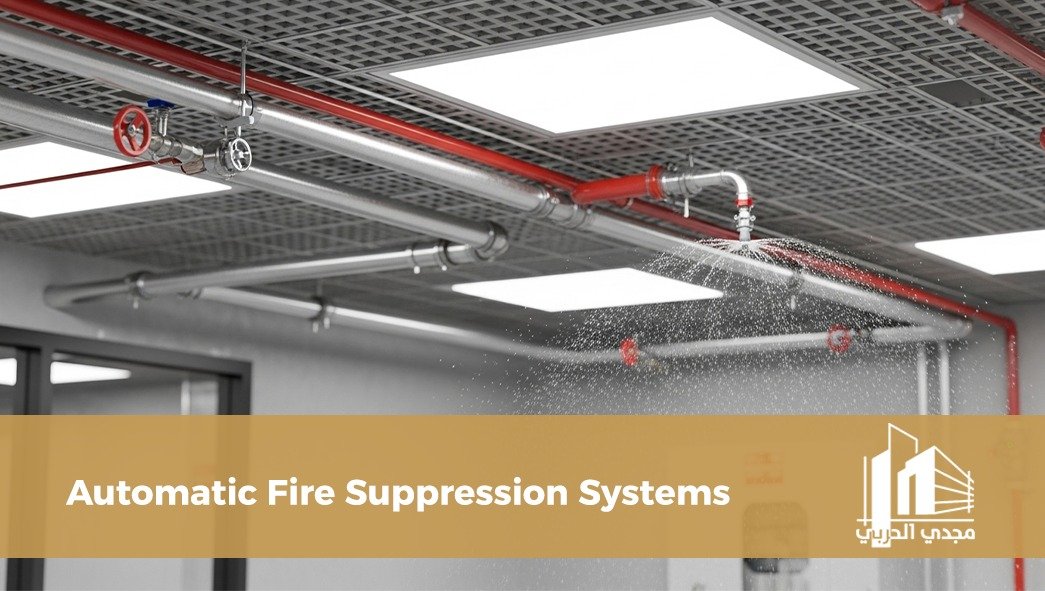
Automatic Fire Suppression Systems to Protect Facilities According to the Highest Safety Standards
Imagine a fire breaking out in a large warehouse in the middle of the night, when there is not a single employee available to help. In the past, this would have been a certain disaster. Today, however, automatic fire suppression systems act as the guard that never sleeps.
These systems are not merely an advanced alternative to manual fire extinguishers; rather, they are rapid-response systems capable of making decisions within fractions of a second—detecting, analyzing, and suppressing a fire before it spreads out of control.
In this article, we will explore the engineering philosophy behind fire protection systems and how to choose the most suitable system for your facility to ensure the highest level of protection and compliance with the Saudi Building Code.
What Are Automatic Fire Suppression Systems?
Automatic fire suppression systems are a set of engineering installations designed to operate automatically once a hazard such as heat or smoke is detected, without the need for human intervention.
The true strength of these systems lies in their rapid response, as they attack fires at the earliest stage of ignition, minimizing material losses and preventing the spread of toxic gases.
Leading Types of Automatic Fire Suppression Systems
These systems vary depending on the extinguishing agent used and the nature of the environment being protected. The most prominent types include:
1. Water Sprinkler Systems (Sprinklers)
Water sprinkler systems are the most widely used and reliable fire suppression systems in the world.
How they work: Sprinkler heads contain a heat-sensitive glass bulb that bursts when a certain temperature is reached, allowing pressurized water to discharge and cover the fire area.
Applications: Ideal for office buildings, hotels, and commercial centers.
2. Clean Agent Fire Suppression Systems
These systems use clean gases such as FM200 or CO₂ to extinguish fires by reducing oxygen levels or interrupting the chemical reaction of the flame.
Key advantage: They leave no residue and cause no water damage.
Applications: Data centers, museums, and medical laboratories where sensitive equipment cannot tolerate water.
3. Dry Chemical Fire Suppression Systems
These systems rely on discharging dry chemical powder that isolates the burning material and rapidly interrupts the chemical chain reaction of the fire.
How they work: The powder is stored in cylinders pressurized with nitrogen and discharged through a network of pipes and specialized nozzles once a fire is detected.
Applications: Electrical transformer rooms, fuel storage tanks, and paint factories, where they are highly effective in suppressing Class B and Class C fires, which involve flammable liquids and electrical equipment.
4. Foam Fire Suppression Systems
These systems operate by mixing water with a chemical foaming agent to form a blanket that isolates the burning liquid surface from oxygen.
Applications: Chemical warehouses, aviation facilities, and fuel stations, where water alone is ineffective against liquid fires.
Components of an Engineering Fire Protection System
Successful fire control depends on the integration of several system components carefully designed by consulting engineers:
Piping and valve networks: The pathways that transport the extinguishing agent to hazard areas.
Fire pumps: The heart of the system, ensuring water flows with the required pressure and speed.
Control and integration panels: These coordinate between the fire alarm system and the suppression system and automatically notify Civil Defense authorities.
Water storage tanks: Provide sufficient water reserves to support the required firefighting duration depending on the facility’s activity classification.
Difference Between Automatic Suppression and Manual Firefighting Methods
While portable fire extinguishers serve as an initial response tool for individuals present on-site, automatic systems offer several advantages:
Comprehensive coverage: They operate in areas that are difficult to access, such as suspended ceilings and skylights.
Continuous operation: They function even in the absence of people or during evacuation.
Greater suppression power: Their extinguishing capability far exceeds the limited capacity of manual fire extinguishers.
Common Mistakes When Implementing Fire Suppression Systems
During engineering supervision, several issues are often observed that may compromise system performance:
Obstructed sprinkler heads: Storage shelves or decorative elements blocking water from reaching the fire.
Lack of pump maintenance: Neglecting weekly pump testing may lead to system failure during emergencies.
Use of non-approved materials: Installing valves or pipes that do not carry the Saudi quality certification mark (SASO).
Cost of Automatic Fire Suppression Systems in Saudi Arabia
Cost is one of the most important concerns for project owners, and it varies depending on several technical and regulatory factors:
Type of selected system: Water sprinkler systems are usually less expensive in terms of equipment compared to gas systems (such as FM200), which require costly gas cylinders and precise volumetric calculations.
Building size and hazard classification: The facility area determines pipe lengths and the number of sprinkler heads, while hazard classification (high, ordinary, or light hazard) determines the required pump capacity and water tank size.
Brand quality: Prices vary between American, European, or locally approved products, and international certifications such as UL/FM affect the final cost.
Saudi Building Code requirements: Compliance with modern standards may require additional components to ensure integration with alarm and ventilation systems, which affects the implementation budget.
Installation and labor costs: Costs vary depending on the complexity of installation, such as high warehouse ceilings or work within existing buildings.
For an accurate estimate, it is always recommended to request a Bill of Quantities (BOQ) from a consulting engineering office after reviewing project drawings to avoid cost gaps during implementation.
Why Is Engineering Design Essential for Success?
Simply installing automatic fire suppression systems does not necessarily mean your facility is fully protected. Proper engineering design ensures:
Accurate hydraulic calculations: ensuring sufficient pressure reaches the farthest sprinkler head in the building.
System compatibility with building activity: for example, installing a water-based system above high-voltage electrical panels would be inappropriate.
Compliance with the Salamah platform: ensuring the building is approved by Civil Defense and eligible for an occupancy certificate.
At Majdi Al-Harbi Engineering & Safety Consultancy, we design customized fire suppression solutions tailored to the nature of your project while ensuring full compliance with the Saudi Building Code.
Would you like to make sure your facility’s fire suppression system is operating efficiently? Contact us now for a technical consultation or a site inspection.
FAQ
Do all sprinkler heads activate at the same time?
No. This is a common misconception often seen in movies. Only the sprinkler head located directly above the heat source activates, which reduces unnecessary water damage.
What is the best fire suppression system for commercial kitchens?
Wet Chemical suppression systems are recommended because they are specifically designed to handle grease and oil fires and can automatically shut off gas supply valves.
Do automatic suppression systems replace the need for fire extinguishers?
No. Civil Defense regulations require both: automatic systems for comprehensive protection and portable fire extinguishers for quick localized intervention.