
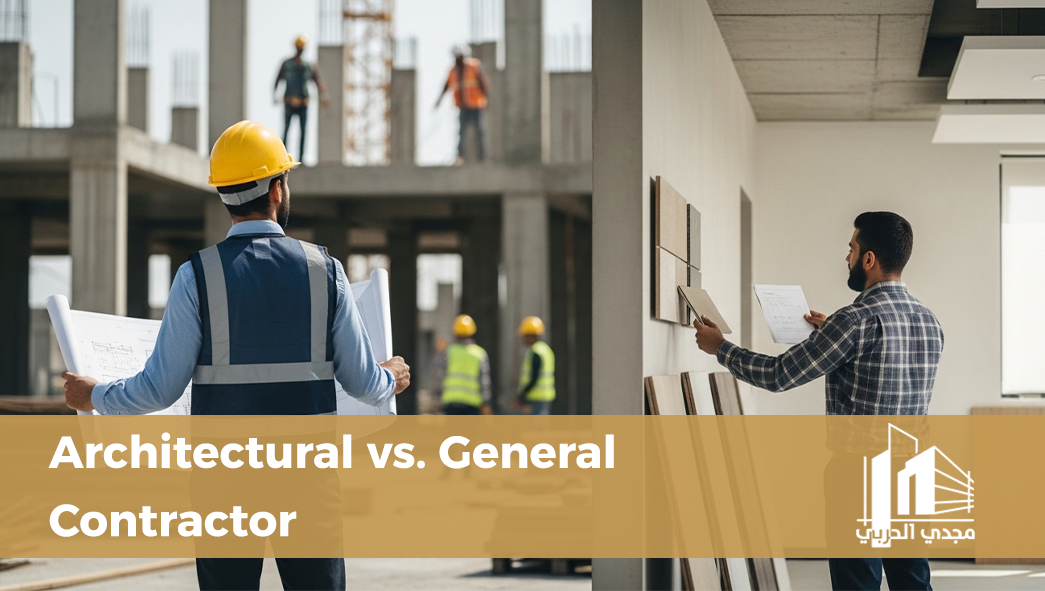
When embarking on the dream of building your lifetime villa or a modern commercial complex in Saudi Arabia, ambition quickly meets the complexity of engineering terminology. You often find yourself facing two options: an architectural contractor and a general contractor.
At first glance, the distinction may seem like a matter of labels. In reality, however, the difference is substantial. Confusing the two can disrupt your project timeline, inflate costs significantly, and compromise execution quality for years to come.
In this guide, we clarify the roles of these two key players. We explain their responsibilities in clear yet technically grounded language to help you make an informed decision—ensuring your investment is entrusted to professionals who understand construction excellence, safety standards, and the quality benchmarks upheld by Majdi Al-Harbi Engineering Consultancy.
What Is an Architectural Contractor?
An architectural contractor serves as the technical bridge that transforms paper designs and conceptual visions into tangible reality with professional precision. Unlike a traditional contractor who may prioritize speed of execution, the architectural contractor focuses on the integrity of design details.
They possess specialized expertise enabling them to understand the designer’s philosophy and work with advanced construction materials such as metal cladding panels, smart glass façades, and concealed lighting systems.
They are not merely executors, but technical specialists who ensure harmony between aesthetic elements and structural safety, guaranteeing that every building detail fulfills its intended architectural and environmental function.
Responsibilities of the Architectural Contractor
The role of the architectural contractor extends beyond conventional construction to include refined engineering aspects that elevate spatial quality:
Shop Drawing Interpretation:
Preparing and reviewing detailed drawings that define installation methods with millimeter precision, preventing on-site conflicts.
Selection and Procurement of Specialized Materials:
Choosing materials such as natural stone, treated wood, or high-performance glass to balance durability with the desired aesthetic appeal.
Supervision of Skilled Craftsmen:
Managing specialized teams such as decorative artisans and façade installers to ensure refined outcomes.
Precision in Proportions and Measurements:
Ensuring accurate angles, surface leveling, and color coordination to achieve a premium finish.
Architectural Sustainability Compliance:
Implementing thermal and waterproofing systems related to façades to ensure energy efficiency in line with the Saudi Building Code.
What Is a General Contractor?
A general contractor is the master coordinator responsible for managing the entire construction process. They are the legal and technical entity contracted directly by the owner to execute the project in full. Their strength lies in managing human, logistical, and financial resources on site.
The general contractor acts as a risk manager and schedule planner, coordinating among various disciplines—civil, architectural, electrical, and mechanical—to deliver a cohesive final product under unified responsibility.
Responsibilities of the General Contractor
As the primary party accountable for project delivery, the general contractor’s duties include:
Contract and Subcontractor Management:
Selecting specialized subcontractors and supervising their performance to ensure specification compliance.
Planning and Scheduling:
Developing a detailed timeline covering excavation, concrete works, and finishing phases, while monitoring progress to avoid delays.
Provision of Resources and Equipment:
Ensuring availability of construction materials and heavy equipment necessary for execution.
Budget Control:
Monitoring expenses and managing financial claims to prevent budget overruns.
Implementation of Safety Regulations:
Ensuring all site activities comply with occupational health and safety standards to protect lives and property.
Key Differences Between an Architectural Contractor and a General Contractor
To simplify decision-making, the following comparison highlights the core distinctions:
Primary Focus:
- Architectural Contractor: Technical details, aesthetics, and luxury finishes.
- General Contractor: Structural framework, site management, and overall logistics.
Scope of Responsibility: - Architectural Contractor: Translating design vision accurately into reality.
- General Contractor: Delivering the entire project from foundation to handover.
Labor Management: - Architectural Contractor: Supervises specialized craftsmen (decor, façades).
- General Contractor: Manages multidisciplinary teams (plumbing, electrical, civil).
Project Stage Involvement: - Architectural Contractor: Typically during finishing phases or design-intensive projects.
- General Contractor: From project inception (bare land) to final delivery.
Managed Risks: - Architectural Contractor: Risks related to architectural defects and material mismatches.
- General Contractor: Risks related to schedule delays, budget overruns, and coordination conflicts.
When Do You Need an Architectural Contractor or a General Contractor?
Your choice depends on your project’s nature and stage:
Choose a General Contractor if you:
- Are starting from scratch (bare land).
- Want a single entity responsible for structural works and full systems integration.
- Prefer turnkey delivery without managing multiple contractors.
Choose an Architectural Contractor if you: - Have completed the structural phase and require high-end finishes or complex façades.
- Are renovating or upgrading the visual identity of an existing building.
- Need high craftsmanship exceeding the capabilities of a conventional contractor.
Tips for Selecting the Right Contractor
To protect your investment, evaluate contractors based on:
Professional Portfolio:
Visit completed projects to assess actual execution quality, not just promotional images.
Technical Literacy:
A professional contractor actively discusses technical details with the engineering consultant and proposes practical solutions.
Safety Compliance Awareness:
Ensure the contractor understands fire safety systems and regulatory requirements—an area of expertise at Majdi Al-Harbi Engineering Consultancy.
Clear Contractual Documentation:
Insist on detailed contracts including bills of quantities, timelines, and warranties.
Common Mistakes When Choosing a Contractor
Many owners make costly mistakes, including:
Assigning a Finishing Specialist to Manage Structural Works:
An architectural contractor may lack the logistical experience required for managing foundational and mechanical phases.
Ignoring the Role of the Engineering Consultant:
Granting full trust to a contractor without independent supervision may lead to material substitutions or specification deviations.
Failing to Clearly Define Scope of Work:
Starting without a detailed contract often results in disputes and unexpected financial claims.
Neglecting Safety Requirements at the Design Stage:
Selecting a contractor focused solely on aesthetics while ignoring fire safety standards can lead to permit rejection or serious future risks.
The fundamental difference lies in scope of focus: the general contractor oversees the structural whole, while the architectural contractor refines the technical and aesthetic details. Choosing correctly protects your project from financial waste and execution risks.
Are you uncertain about how to begin your project or seeking engineering supervision that guarantees quality execution? Majdi Al-Harbi Engineering Consultancy offers extensive expertise in project supervision and compliance with the highest safety and fire protection standards. Contact us today to transform your plans into a safe and sustainable reality.
Frequently Asked Questions (FAQ)
Can a general contractor perform the role of an architectural contractor?
Yes, but for projects with complex design details, hiring a specialized architectural contractor ensures higher-quality finishing.
Which is more cost-effective for large projects?
A general contractor is typically more economical, as they reduce costs associated with coordination errors between separate disciplines.
What is the role of the engineering consultant between them?
The consultant—such as Majdi Al-Harbi Engineering Consultancy—acts as the owner’s representative, monitoring quality, approving stages, and ensuring full compliance with the Saudi Building Code and safety requirements.