
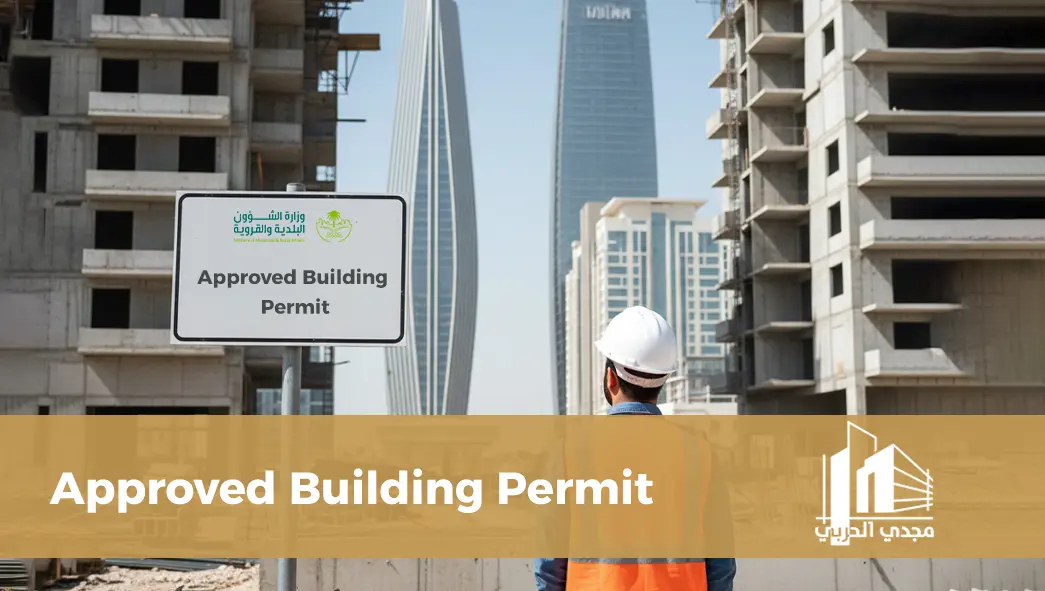
Building permits in Saudi Arabia are issued through the Balady Platform as a mandatory step to start any construction work. Compliance with the new Saudi Building Code is required, including the submission of approved engineering plans and insurance against hidden defects. To ensure approval, all procedures must be carried out through a licensed engineering office that supervises the project’s compliance with municipal regulations and technical requirements, along with the payment of the prescribed fees for final permit issuance.
What Are the Requirements for Obtaining a Building Permit?
Approval of permit applications depends on meeting a set of precise requirements set by the Ministry of Municipal, Rural Affairs, and Housing, including:
Engineering Contract: Begin by appointing a certified consulting office to prepare studies, conduct surveys, and design the project plans.
Ownership Deed: Provide an updated electronic deed proving land ownership, free of legal disputes or construction restrictions.
Saudi Building Code Plans: Submit engineering drawings (structural, architectural, electrical, and mechanical) compliant with updated sustainability and safety standards.
Insurance Document: Pay mandatory insurance against hidden defects for residential buildings through approved insurance companies to ensure execution quality.
Civil Defense Approval: Comply with safety and fire protection requirements, especially for commercial buildings and large facilities.
How Has the Building Permit System Evolved Recently in Saudi Arabia?
Saudi Arabia has introduced a digital transformation in building permits to simplify procedures and reduce processing time. The system now fully relies on the Balady Platform, connecting all relevant authorities. This has standardized construction permit requirements across the Kingdom, improved urban construction quality, and ensured that citizens receive buildings meeting the highest international safety standards.
How Much Does a Building Permit Cost in Saudi Arabia?
The total cost includes several components:
Municipality Fees: Calculated based on total built-up area and paid electronically via the unified payment system.
Consulting Office Fees: Vary depending on project size and technical complexity, covering design and on-site supervision.
Survey Issuance Fees: Fixed fees paid during the initial stages to accurately determine site coordinates.
Soil Testing Costs: Essential technical tests to determine the ground’s load-bearing capacity, which informs the type of structural foundations.
What Documents Are Required to Obtain a Building Permit?
Permit applications require a set of digital documents:
A copy of the owner’s national ID or company registration.
A coordination certificate from the electricity company confirming service availability.
A soil test report from an accredited laboratory detailing the site’s geological characteristics.
Building compliance certificates and quality guarantees for materials used in foundations and structural works.
Contract with a registered construction contractor to ensure compliance with professional building standards.
What Is the Building Ratio for Residential Buildings?
Municipalities regulate building ratios to ensure quality of life and proper ventilation and privacy:
Ground floor coverage usually ranges between 60% to 65% of the total plot area.
Additional coverage is allowed for upper floors according to specific regional regulations.
Compliance with street and side setbacks ensures natural light for each unit.
All ratios are governed by the Saudi Building Permit Regulations specific to each district and planning zone.
How Is a Building Permit Issued via Balady Platform?
The permit process follows a fully digital workflow:
Log in to the platform and select construction permit services, then choose “Issue Building Permit.”
The owner selects a certified engineering office, such as Majdi Al-Harbi Engineering Office, to start preparing the technical file and electronic contract.
The office uploads all plans and technical reports, ensuring compliance with the new Saudi Building Code.
The transaction undergoes technical review by the municipality to verify the accuracy and safety of designs before invoice approval.
What Is the Role of the Engineering Office in Ensuring Permit Approval?
A consulting engineering office plays a crucial role in minimizing waiting times and avoiding rejected applications. Experienced offices, such as Majdi Al-Harbi Engineering Office, internally review all plans to ensure they are error-free. This ensures compliance with strict permit issuance requirements, protecting the owner from fines or project delays. The office also provides smart solutions balancing architectural aesthetics with energy efficiency.
Importance of Updating Building Permit Data for Investors
Maintaining updated building permit data is essential for real estate investors. Any discrepancy between the licensed plans and actual construction may affect sales or bank financing. The new system allows precise tracking of all construction stages, enhancing market transparency and protecting the rights of all parties involved.
Thermal Insulation Standards and Their Impact on Permit Approval
Current building permit regulations impose strict thermal insulation requirements to reduce long-term energy consumption. Engineering offices design walls and roofs with specifications ensuring energy efficiency—an essential step for obtaining final municipal approval.
How to Handle a Rejected Building Permit Application
If a permit is rejected, a detailed notification is issued explaining the reasons, usually due to conflicts with zoning lines or missing approvals. Experienced offices like Majdi Al-Harbi Engineering Office analyze the rejection, resolve technical issues, and resubmit the application to ensure permit issuance as quickly as possible without unnecessary additional costs.
Economic Impact of Fast Building Permit Issuance
Quick permit processing stimulates the real estate and construction sectors. Clear and streamlined procedures encourage owners to start projects promptly, boosting the local economy. Choosing an experienced engineering office familiar with procedural nuances is a strategic investment saving time and money.
Compliance with Construction Timelines and Permit Extensions
Permits grant a defined timeframe for project initiation and completion. If the owner faces delays, an extension request must be submitted via Balady before expiration. Extensions require a report from the supervising engineering office detailing the current site status and achieved progress, ensuring alignment with ongoing updates to Saudi building permit regulations.
Conclusion
Obtaining a building permit in Saudi Arabia requires full awareness of current regulations and collaboration with experienced engineering offices to turn visions into legally compliant, sustainable realities. Adhering to all building permit requirements paves the way for construction projects free of technical or legal obstacles.
For specialized engineering support ensuring your permit is issued with the highest standards of accuracy, contact Majdi Al-Harbi Engineering Office.