
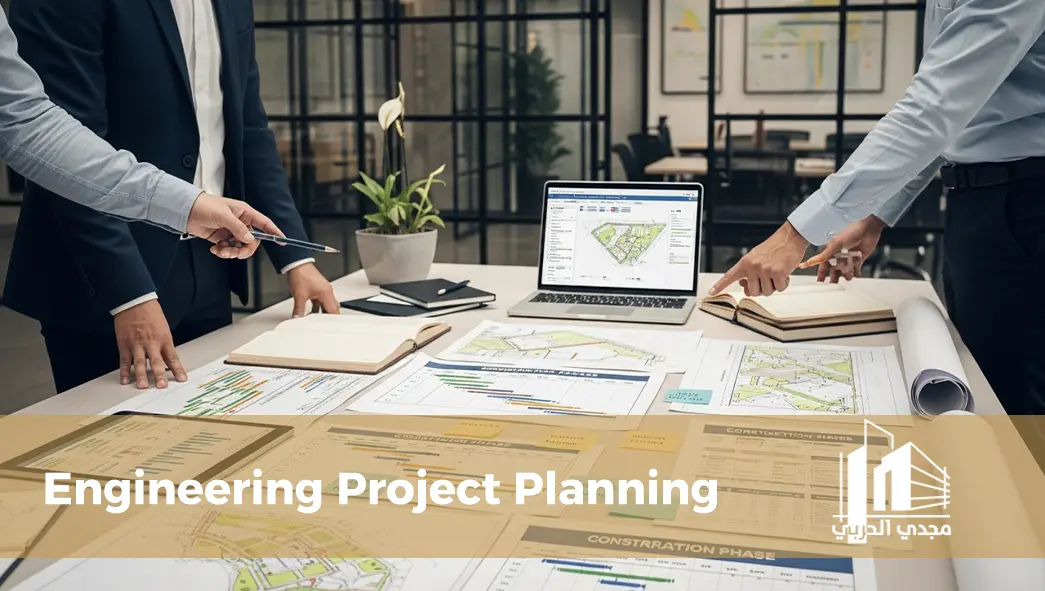
Imagine starting your project in Saudi Arabia without a clear plan, only to later face execution issues, rising costs, or unexpected delays. This is where engineering project planning plays a critical role—transforming your ideas into a successful project from initial concept to final handover.
Engineering planning is not merely about preparing drawings; it is a comprehensive process that includes needs analysis, project development, and design stages, while ensuring precise monitoring throughout every phase. In this article, we guide you through each stage in detail and highlight modern tools and technologies that help achieve high quality and minimize risks.
Why Is Engineering Planning Essential for Projects?
Engineering project planning is fundamental to avoiding errors, ensuring efficient resource utilization, and coordinating work among all teams. It establishes a clear vision from the outset and lays the foundation for long-term success.
The first step is needs analysis, which involves studying everything required for the project to achieve its operational, design, and financial objectives.
The project development stage focuses on creating practical solutions, selecting suitable materials and technologies, coordinating all engineering disciplines, and ensuring compliance with Saudi regulations and standards.
Proper planning reduces risks, saves time and cost, and ensures smooth workflow—keeping architects, engineers, and contractors aligned from day one.
Needs Analysis: The Foundation of Successful Planning
Needs analysis is the cornerstone of any project. During the engineering planning phase, essential data is gathered regarding the site, surrounding environment, operational requirements, and space allocations. It also includes consultations with project owners to define priorities and quality expectations.
Practical Example:
In a residential project, early analysis of ventilation, electrical systems, and HVAC requirements ensures occupant comfort and operational efficiency while reducing costly future modifications.
In commercial projects, studying traffic flow, safety systems, and equipment requirements facilitates daily operations.
Accurate needs analysis ensures that every decision during the design and development stages is data-driven, preventing execution issues later.
Project Development: Turning Ideas into Actionable Plans
This stage focuses on transforming ideas into practical, implementable designs. It includes:
Selecting appropriate materials and technologies.
Coordinating all engineering disciplines to ensure design compatibility.
Establishing a defined execution timeline.
Preparing a risk management plan for potential challenges.
Engaging integrated engineering consultancy services at this stage is critical. It ensures that all proposed solutions are feasible, compliant with Saudi standards, and aligned with the project’s technical and operational needs.
This results in a practical, executable development plan without surprises, while maintaining control over technical and financial risks.
Risk Assessment During Engineering Planning
A key component of engineering project planning is evaluating potential risks before construction begins. This includes:
Analyzing technical challenges related to site conditions or materials.
Identifying financial risks and verifying budget alignment.
Reviewing local regulations and Saudi standards to avoid legal complications.
Practical Example:
When designing a commercial building, neglecting electrical load assessment may result in system failures and work stoppages. Early evaluation allows necessary design adjustments before execution.
Risk assessment enhances project safety and enables proactive decisions that reduce unexpected delays and additional costs.
Design Stages: From Concept to Final Drawings
The design process typically includes:
1. Conceptual Design
Defining the overall vision, space distribution, and primary functions of the project.
2. Detailed Design
Preparing precise architectural, structural, electrical, and mechanical drawings while ensuring compliance with project specifications and Saudi standards.
3. Construction Design
Final approved drawings submitted to contractors and authorities, fully documented and ready for implementation.
Coordination among teams at every stage prevents design errors, ensures full integration across disciplines, and minimizes the need for modifications during execution.
The Importance of Project Follow-Up After Planning
Even after completing the planning phase, ongoing project monitoring remains essential to ensure plans are implemented accurately. This includes:
Verifying contractor compliance with drawings and specifications.
Conducting regular meetings to review progress and address issues immediately.
Updating plans when necessary without affecting timelines or quality.
Proper follow-up ensures that engineering planning translates into smooth execution from start to final delivery.
Modern Tools & Technologies for Efficient Engineering Planning
Utilizing advanced technologies enhances the accuracy and efficiency of engineering project planning:
BIM (Building Information Modeling): For multidisciplinary coordination and digital project tracking.
AutoCAD & Revit: For preparing precise drawings and reviewing details before execution.
Project management software such as Primavera: For efficient scheduling and resource management.
These tools reduce human error, improve communication among teams, and deliver more accurate and effective results.
How Engineering Project Planning Improves Project Quality
Effective planning ensures:
Unified vision across all engineering teams.
Reduced modifications during construction.
Compliance with Saudi standards and specifications.
Efficient use of resources and materials.
In this way, a project transforms from an idea into a well-organized reality, with full coordination among disciplines and adherence to regulatory requirements.
Why Choose Engineer Majdi Al-Harbi Company?
Engineer Majdi Al-Harbi Company offers a comprehensive approach to engineering project planning:
A multidisciplinary team ensuring coordination across design, development, and execution.
Strong focus on risk reduction and compliance with Saudi standards.
Detailed reports and structured plans supporting informed decision-making before execution.
Continuous follow-up throughout all project stages to ensure smooth, high-quality implementation.
Choosing the right company means placing your project in trusted hands—benefiting from specialized expertise, precise planning, and seamless execution that guarantees project success without unexpected challenges.
Frequently Asked Questions
Do all projects require detailed engineering planning?
Yes. Regardless of project size, planning reduces risks and ensures smooth execution.
Can engineering plans be modified after detailed design?
Yes, but proper planning minimizes the need for major changes during construction.
What is the difference between needs analysis and project development?
Needs analysis defines project requirements, while development transforms them into practical, implementable solutions.
What are the modern engineering planning tools?
BIM, AutoCAD, Revit, and Primavera for multidisciplinary coordination and efficient schedule tracking.
Conclusion
Engineering project planning is a fundamental step in ensuring the success of any project in Saudi Arabia. From needs analysis and project development to design stages and follow-up, every step contributes to execution quality and risk reduction.
Contact Engineer Majdi Al-Harbi Company today and request your free consultation to ensure precise planning and seamless execution—from concept to final handover.