
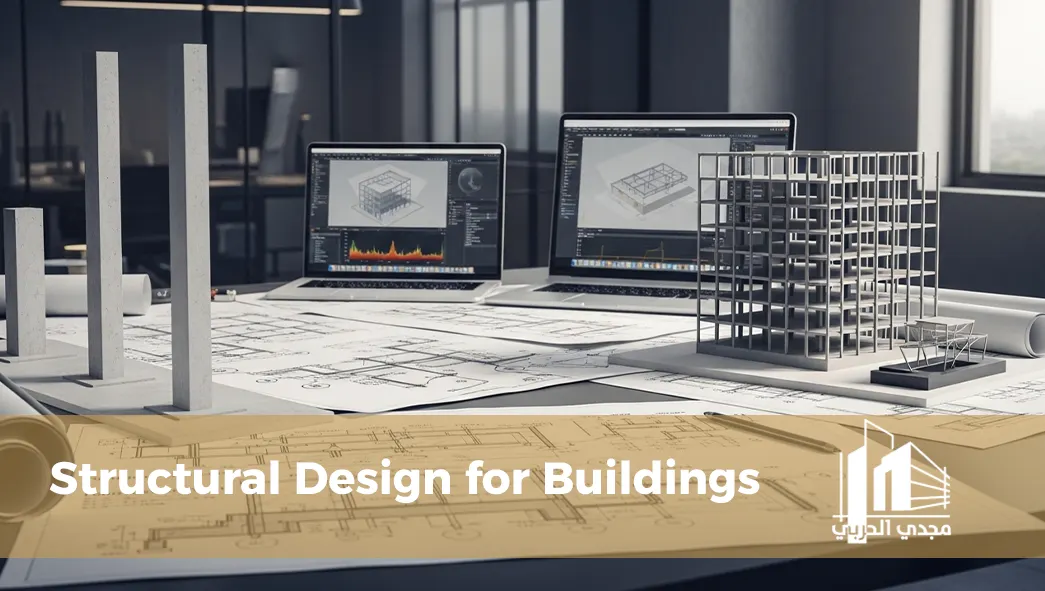
Structural design is the technical foundation that transforms architectural visions into a tangible reality characterized by strength and safety. The role of the structural engineer goes beyond calculating loads; it extends to engineering solutions that ensure the building’s sustainability and its ability to withstand various forces throughout its service life.
Concept of Structural Design and Its Objectives
Structural design is defined as the engineering process aimed at determining the dimensions and configuration of structural elements such as foundations, columns, and slabs. The primary objective is to ensure the safe and systematic transfer of loads (dead and live loads) from the top of the building down to the soil, in full compliance with the requirements of the Saudi Building Code.
Core Components of the Structural System
Structural design consists of several essential components that guarantee long-term stability and safety. Each element plays a specific role in distributing loads and resisting forces acting on the building. The most prominent components include:
Structural Framework: This includes columns, beams, and load-bearing walls that form the backbone of the building. The structural system distributes loads evenly from the foundations upward, preserving stability and reducing the risk of cracks or collapse.
Concrete Works (Structural Concrete Elements):
These represent the fundamental load-bearing components of the building, including foundation slabs, columns, and floor slabs. They are responsible for withstanding pressures generated by structural loads.
To ensure quality execution and resistance to environmental fluctuations, the following practices must be observed during concrete casting:
- Concrete Mix Specifications: Verifying the concrete grade (required compressive strength) and ensuring alignment with approved structural calculations.
- Proper Casting and Mechanical Compaction: Using mechanical vibrators during pouring to ensure density and prevent air voids (honeycombing).
- Water Curing: Spraying concrete with water for a specified period after casting to ensure it reaches its required design strength and to prevent thermal cracking caused by rapid drying.
Reinforcement Detailing:
This includes precise placement of reinforcing steel according to structural drawings. Reinforcement enhances concrete strength and improves resistance to tension and bending forces. Accurate reinforcement detailing ensures proper structural performance and preserves long-term project safety.
The precise coordination between the structural framework, concrete works, and reinforcement detailing forms the foundation of every successful structural design, ensuring stability and compliance with engineering standards and the Saudi Building Code.
Key Standards and Specifications for Structural Design in Saudi Arabia
Structural design in the Kingdom is governed by regulations and standards aimed at improving construction quality and ensuring occupant safety. The most significant include:
Compliance with the Saudi Building Code (SBC):
The mandatory reference for all engineering offices, defining minimum structural resistance requirements, particularly regarding seismic loads (SBC 301) and concrete structures (SBC 304).
Material Strength Standards:
Specified grades for concrete and reinforcing steel must comply with standards issued by the Saudi Standards, Metrology and Quality Organization (SASO) to withstand harsh climatic conditions.
Soil Mechanics Studies:
Conducting soil investigations before design is mandatory to determine bearing capacity and select appropriate foundation types, preventing future settlement or cracking risks.
Environmental Durability Requirements:
Ensuring adequate concrete cover thickness and high-quality insulation to protect reinforcing steel from salts and moisture, especially in coastal areas.
Practical Steps for Preparing Structural Design
Developing structural design follows precise technical stages to ensure accuracy and building safety:
Architectural Plan Review:
Analyzing architectural layouts to determine optimal column and load-bearing wall locations without compromising the building’s aesthetic function.
Load Analysis:
Calculating all acting forces, including dead loads (self-weight), live loads (occupancy and furnishings), and wind and seismic loads according to geographic location.
Structural Modeling:
Creating a digital model of the building using advanced engineering software to simulate structural behavior under various stress conditions.
Element Design and Detailing:
Determining dimensions of concrete elements and reinforcement quantities for foundations, columns, and slabs, while meeting durability and safety requirements.
Issuance of Construction Drawings:
Converting calculations into clear technical drawings, including reinforcement details and quantity schedules to enable accurate on-site implementation.
The Role of Engineering Consultancy Offices in Structural Design
Engineering consultancy offices serve as the safety authority responsible for translating technical requirements into a secure reality. Their role includes:
Verification and Approval:
Reviewing structural calculations to ensure compliance with international standards and the Saudi Building Code for both legal and technical safety.
Efficiency and Cost Optimization:
Providing intelligent structural solutions that balance maximum safety with cost efficiency in materials such as steel and concrete without compromising quality.
On-Site Technical Supervision:
Monitoring construction stages (reinforcement placement and concrete casting) to ensure alignment with approved design drawings and correcting deviations immediately.
Managing Structural Challenges:
Addressing soil issues, high-rise demands, and complex conditions with innovative engineering solutions to ensure structural stability.
The success of any project begins with the quality of its structural design and the precision of its structural framework execution in accordance with approved drawings. Attention to concrete quality and strict adherence to reinforcement detailing provide the true guarantee of building sustainability and the protection of lives and property.
At Majdi Al-Harbi Engineering Consultancy, we believe engineering is a blend of analytical precision and practical innovation. We provide comprehensive structural consulting services aligned with the Saudi Building Code to ensure the highest levels of safety and efficiency.
Frequently Asked Questions About Structural Design
What is the difference between an architect and a structural engineer?
An architect focuses on exterior design, interior planning, and aesthetics, while a structural engineer focuses on the building’s strength, stability, and the design of elements that prevent structural failure.
Can structural design be modified after construction begins?
Yes, but only after review by the structural designer to recalculate loads and confirm that the modification does not compromise the overall structural integrity of the building.
Why do cracks appear in concrete immediately after casting?
Such cracks often result from rapid evaporation of water in concrete (shrinkage cracking) or inadequate curing. Therefore, approved water-curing schedules must be strictly followed.
How can I ensure the quality of reinforcement detailing in my home?
By contracting a specialized engineering office to supervise execution. The supervising engineer verifies steel diameters, lap lengths, and stirrup distribution against approved structural drawings before casting.