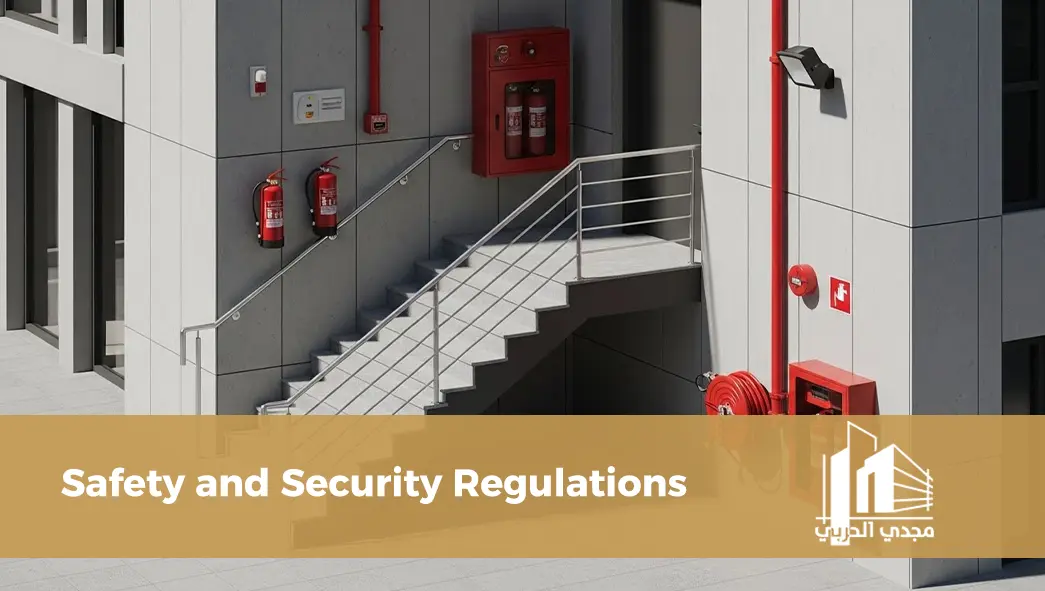
Safety and security requirements in real estate facilities are an essential part of the modern construction system in Saudi Arabia. Their primary goal is to protect lives and property from potential risks such as fires, structural collapses, or operational accidents. Implementing building safety standards requires full compliance with the Saudi Safety Code, which defines detailed technical specifications for building materials, early warning systems, and fire suppression systems. It also includes clear evacuation requirements to ensure occupants can exit safely during emergencies.
What are the requirements of the Saudi Building Code 601?
The Saudi Building Code 601 (SBC 601) is the primary legal and technical reference that defines fire protection and safety requirements for all types of buildings. Key requirements include:
Building Compartmentation: Dividing the building into fire-resistant sections using walls and floors designed to prevent the spread of fire and smoke between areas for a specified time period.
Fire-Resistant Materials: Using construction materials, paints, and interior or exterior finishes that have high resistance to fire and do not contribute to flame spread or produce dense toxic gases.
Smart Detection and Alarm Systems: Installing an integrated network of smoke and heat detectors connected to a central control panel capable of identifying the exact location of risk and activating emergency systems automatically.
Emergency Vehicle Access: Providing external access routes and ramps that allow civil defense and emergency vehicles to reach the building and water sources without obstruction. This requirement is often inspected before licensing approval.
Building Safety Requirements
Safety requirements must be integrated throughout all stages of construction, from initial design to final finishing. Key aspects include:
Structural Safety and Stability: Ensuring the structural system can withstand loads, shocks, and environmental conditions through soil testing and quality control of construction materials.
Electrical System Safety: Using cables and circuit breakers that comply with Saudi standards (SASO) and designing electrical panels to prevent short circuits and overloads.
Fire Protection Systems: Installing fire hose reels, fire extinguishers, and independent fire pumps capable of operating even during power outages.
Smoke Control and Ventilation Systems: Designing smoke extraction and stair pressurization systems to keep evacuation routes clear during emergencies.
Civil Defense Safety Requirements in Buildings
Safety regulations align with strict guidelines issued by the Saudi Civil Defense. These include:
Emergency Exit Design: Providing an adequate number of exits depending on building size and occupancy, equipped with panic hardware and fire-resistant doors.
Emergency Signage and Lighting: Installing illuminated exit signs and backup emergency lighting systems to guide occupants during power outages.
Maintenance Contracts: Building owners must contract licensed maintenance companies approved by Civil Defense to regularly inspect fire protection systems and record results in a safety log.
Training and Emergency Plans: Building management must train an internal safety team to operate firefighting equipment and manage organized evacuation procedures.
The Importance of Safety Codes in Protecting Property Value
Compliance with safety regulations is not only a preventive measure but also an economic investment. Buildings that strictly follow safety codes often receive better insurance and financial evaluations. In addition, global companies and major tenants consider safety compliance a key factor when selecting office spaces, which helps property owners maintain higher occupancy rates and stable returns.
The Role of Eng. Majdi Al-Harbi Engineering Office
The office of Engineer Majdi Al-Harbi plays a key role in translating complex safety regulations into effective engineering solutions. The office provides comprehensive safety services including:
Proactive Engineering Design: Integrating fire alarm and suppression systems from the earliest design stages.
Risk Assessment Studies: Conducting detailed analysis to identify potential safety weaknesses and propose improvements.
Safety Plan Approvals: Coordinating with Civil Defense authorities to ensure designs meet updated safety requirements.
On-Site Supervision: Ensuring contractors implement fire protection systems according to approved specifications.
Evacuation Requirements and Safe Escape Routes
Evacuation planning is a critical component of building safety. Escape routes must remain clear of obstacles and flammable materials and lead to designated assembly points located at a safe distance from the building. Staircases and ramps must include anti-slip surfaces and adequate lighting, with accessibility considerations for people with disabilities.
Modern Building Systems: Integrating Technology into Safety
Modern safety systems increasingly incorporate artificial intelligence and Internet of Things (IoT) technologies. These systems can detect electrical faults before fires occur or automatically activate stair pressurization systems when smoke is detected. Such technologies enhance response speed and reduce reliance on manual intervention.
Handling Hazardous Materials in Industrial Buildings
Facilities that store or handle flammable or chemical materials require additional safety measures. These may include isolated storage rooms with gas-based fire suppression systems such as FM200 or CO₂ and gas leak detection systems to prevent hazardous incidents.
Legal and Ethical Responsibility of Owners and Consultants
Compliance with safety regulations is not only a regulatory requirement but also a legal and ethical responsibility. Neglecting safety standards can lead to severe penalties and legal liability in case of accidents. Working with experienced engineering offices helps ensure compliance and protects investments.
Upgrading Safety Systems in Existing Buildings
Older buildings constructed before updated codes may require safety upgrades. Engineers typically conduct technical assessments to evaluate existing systems and recommend improvements such as installing sprinkler systems or upgrading alarm panels to meet current standards.
Ultimately, adhering to safety and security requirements is essential for creating safe urban environments that protect human lives and support sustainable development. Investing in safety today ensures a safer and more stable future.
Get a specialized engineering consultation from Eng. Majdi Al-Harbi Engineering Office to ensure your facility complies with the highest safety and security standards.