
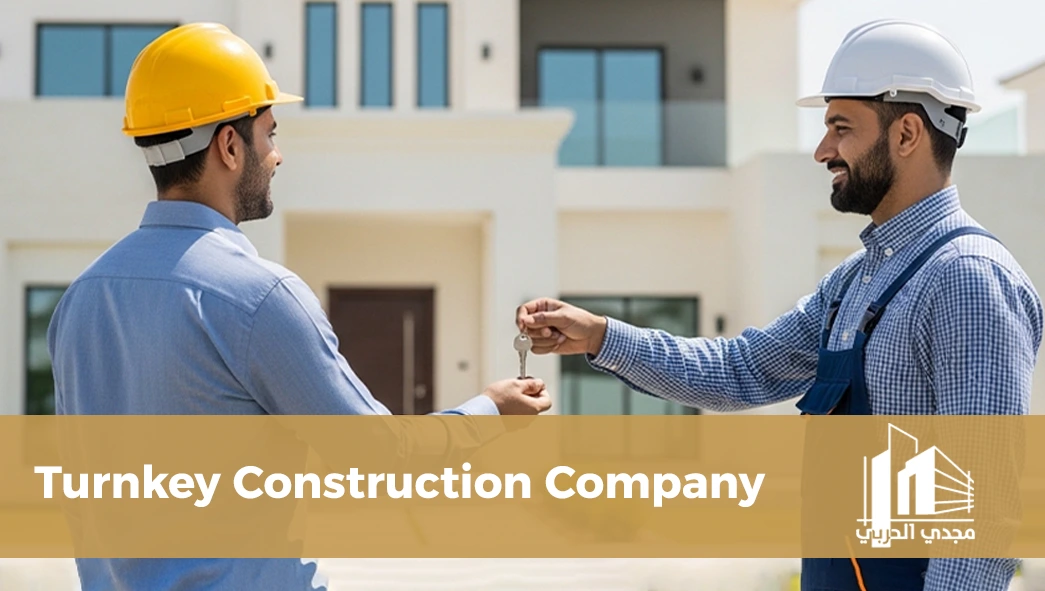
Are you looking for the most effective way to transform an empty plot of land into a fully completed facility without getting involved in the complexity of coordinating dozens of suppliers and technicians? Choosing a turnkey construction company in Saudi Arabia has become the preferred approach for investors and property owners who value their time and seek consistent quality.
However, behind the term turnkey delivery lies a set of detailed engineering and procedural elements that determine whether the investment succeeds or fails.
In this article, we will explore the concept of turnkey projects, their advantages, and how to evaluate companies that provide these integrated construction services according to modern Saudi standards.
What Does Contracting with a Turnkey Construction Company Mean?
A turnkey contract is a contractual model in which the contractor commits to executing all stages of the project—from excavation and structural works (the building shell) to final finishes and installation of mechanical and electrical systems—so that the owner receives the building fully ready for immediate operation.
For the client, this means dealing with a single entity responsible for quality, scheduling, and compliance with the Saudi Building Code, which significantly reduces the risks associated with fragmented responsibilities among multiple parties.
What Services Does a Turnkey Construction Company Provide?
When you contract with a company specialized in turnkey construction, the service package typically includes the following phases:
Structural Works (Building Shell)
Includes excavation, foundations, columns, and slabs, along with the supply of approved reinforcing steel and concrete.
Integrated Insulation Works
Waterproofing and thermal insulation for foundations, beams, roofs, and bathrooms using modern technologies.
Mechanical, Electrical, and Plumbing Systems (MEP)
Includes installation of plumbing, electrical systems, air-conditioning networks, and fire protection systems according to approved engineering drawings.
Architectural Finishing Works
Plastering, painting, flooring installation (marble or ceramic), and suspended ceilings (gypsum board).
External Works
Includes façade finishing, boundary walls, and site landscaping.
Testing and Commissioning
Conducting pressure tests for pipelines, electrical load testing, and operating HVAC systems before final handover.
The Difference Between Turnkey Contracting and Fragmented Contracting
Project owners often hesitate between two options: comprehensive contracting or dividing the works among multiple contractors. Here are the key differences:
Unified Responsibility
In turnkey systems, the contractor responsible for painting is also responsible for plastering the walls. If a defect appears, the contractor cannot blame another party. In fragmented contracting, technicians often shift blame for errors, leaving the owner responsible for repair costs.
Engineering Coordination
A turnkey contractor ensures that air-conditioning installations do not conflict with gypsum decorations. In fragmented contracting, you may discover too late that plumbing installations interfere with suspended ceiling works.
Hidden Cost Efficiency
Although fragmented contracting may appear cheaper initially, the costs of material waste, execution errors, and the owner’s time spent on supervision often make turnkey contracting the more cost-effective option in the long term.
Why Do Investors Prefer Integrated Turnkey Services?
Hiring a professional turnkey contractor provides strategic advantages that fragmented contracting models cannot offer:
Single Point of Contact
Communication is handled through a single project manager representing the company, reducing technical and financial misunderstandings.
Better Scheduling Control
The company can coordinate overlapping project phases, significantly accelerating project completion.
Budget Control
Costs are predetermined based on detailed quantity schedules, protecting the owner from unexpected price fluctuations.
How to Estimate the Cost of Turnkey Projects
The cost of turnkey projects depends on several essential factors that should be considered before starting:
Project Type
Costs vary between residential villas, office towers, and medical facilities.
Technical Specifications of Finishing
Choice between finishing levels (economic, standard, or luxury).
Site Conditions
Soil conditions and the geographical location of the project.
It is also important to note that the lowest price does not always represent the best deal. Contractors offering extremely low bids may reduce the quality of hidden materials, which can lead to significantly higher maintenance costs later.
Criteria for Choosing Turnkey Construction Companies
When evaluating companies that provide integrated construction services in the Saudi market, focus on the following aspects:
Financial Stability and Execution Capability
Ensure the company is financially stable and capable of completing the project.
Ability to Manage Engineering Integration
Smooth integration of HVAC, fire protection, and electrical systems with the architectural design.
Regulatory Compliance
Adherence to the requirements of the Civil Defense, the Balady platform, and the Saudi Building Code.
The Role of Engineering Supervision in Turnkey Contracts
Some people believe that hiring a turnkey construction company eliminates the need for a consulting engineer, but this is a common misconception.
In reality, the role of the consultant becomes even more critical. The consultant acts as the owner’s representative by verifying that supplied materials match specifications, ensuring the quality of execution during critical stages, and approving payments based on actual progress.
Contracting with a turnkey construction company in Saudi Arabia is a smart step toward achieving efficiency and fast project delivery—provided that the relationship is built on a precise engineering contract and independent technical supervision.
Success in such projects is not measured solely by the building’s external appearance but also by the durability of its systems and their compliance with sustainable safety standards.
At Majdi Al-Harbi Engineering and Safety Consultancy, we do not perform construction ourselves. Instead, we ensure that construction is done correctly by reviewing contracts, auditing engineering drawings, and conducting strict on-site supervision.
Are you considering starting your project with a turnkey system? Contact us today to help you create an engineering roadmap that protects your rights and safeguards your investment.
Frequently Asked Questions (FAQ)
What guarantees should I obtain from a turnkey contractor?
You should obtain structural warranties (usually ten years), warranties on supplied materials from authorized suppliers, and a workmanship guarantee for a specific period after project handover.
Can specifications be modified during execution in turnkey contracts?
Yes, through change orders. However, it is recommended to finalize most details during the design stage to avoid cost increases or delays in the project schedule.
Does a turnkey contract include furnishing the building?
The contract typically includes architectural finishing and essential systems. Movable furniture is considered an additional item unless the contract explicitly states otherwise.
How can I protect myself from contractor delays?
By including clear penalty clauses in the contract and linking payment installments to a strict timeline approved by an independent consulting office.