
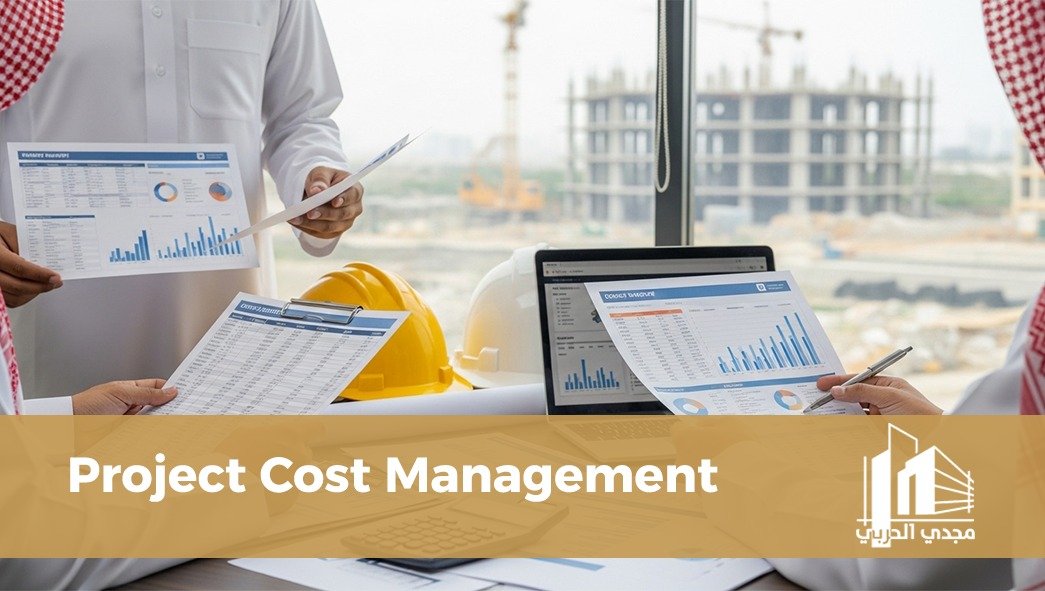
Have you ever wondered why some people start building a house or a commercial project with a defined budget, only to find themselves halfway through the project having spent twice the planned amount? The difficult reality in the construction world is that financial surprises can drain a lifetime of savings if project cost management is not handled professionally from the very beginning.
In today’s Saudi construction market, and with the strict compliance required by the new Saudi Building Code, saving money no longer means buying cheaper materials. Instead, it means managing the project intelligently. In this article, we will reveal the secrets of controlling project budgets and avoiding the delay traps that drain your finances.
What Is Project Cost Management?
Project cost management is the process of planning, estimating, and controlling expenses throughout the project lifecycle.
Financial management in construction projects is not limited to paying invoices. It also involves risk forecasting, resource allocation, and financial monitoring to ensure the project is delivered without exceeding the approved budget.
In engineering projects, successful financial management is the one that balances structural quality with economic feasibility.
Causes of Budget Overruns and Project Delays
In most cases, cost control failure is directly linked to schedule delays. Time and money are two sides of the same coin—lost time always leads to budget depletion.
Below are the main factors that cause financial and scheduling problems in construction projects and how to avoid them:
Incomplete drawings and insufficient studies: Ambiguities in engineering drawings generate on-site questions that delay work progress and require additional approvals and decisions, increasing operational costs.
Field modifications (Change Orders): Changing the design after construction has started—especially if it affects completed work—is one of the biggest causes of budget overruns and schedule disruption.
Poor communication and coordination: Communication gaps between the owner, contractor, and consultant often lead to execution errors that require rework, resulting in double losses in both time and materials.
Supply chain disruptions: Delays in selecting, approving, or delivering materials to the construction site halt related activities, causing productivity losses while fixed project costs continue.
Ignoring safety and fire protection requirements: Failure to integrate Civil Defense regulations and Saudi Building Code requirements early in the design phase may later force demolition or redesign of completed work to obtain approvals, leading to significant financial and time losses.
Key Pillars of Effective Project Budget Control
To effectively control your project budget, your strategy should rely on three essential pillars:
Accurate Bill of Quantities (BOQ): This document specifies every component required for the project—from structural materials to finishing details. Without it, the project moves forward blindly from a financial perspective.
Cash Flow Planning: Knowing when major payments will be required helps you organize financial liquidity and maintain continuous project progress.
Contingency Reserve: In engineering practice, a contingency margin—typically 5% to 10% of the project budget—is allocated to address unforeseen events or sudden material price increases.
Steps to Implement Cost Management in Engineering Projects
To ensure a structured and effective approach to cost control, the following engineering steps should be implemented:
Approving Final Drawings
Ensure that architectural, structural, and safety system details are finalized before project execution begins. Modifications on paper are investments; modifications on-site are financial losses.
Applying Value Engineering
Request the engineering consultant to review designs and propose intelligent alternatives that achieve the same functional and aesthetic performance at lower cost without compromising safety.
Technical Evaluation of Contractor Bids
Do not compare prices alone. Evaluate technical specifications, workforce competence, and warranty coverage. The cheapest offer often hides higher maintenance costs in the future.
Linking Payments to Actual Progress
Financial payments should be released only after the consultant verifies that each stage of construction has been completed according to specifications. This ensures that paid amounts correspond to actual project value.
Strict Resource and Waste Control
Implement periodic reporting systems to monitor delivered and consumed materials and reduce construction waste, which is often a hidden cause of budget overruns.
The Importance of a Realistic Project Schedule
In engineering, time and money are directly connected. Every day of delay means additional cost.
A well-prepared project schedule is not just a list of dates. It serves several critical functions:
Identifying the project’s critical path.
Coordinating work between different contractors to avoid idle waiting time.
Linking financial payments to progress milestones.
When Do You Need a Specialized Project Management and Engineering Consultancy Firm?
Some project owners believe personal supervision is sufficient. However, certain indicators show that professional engineering support is essential:
Technically complex projects: such as high-rise buildings, factories, or healthcare facilities that require advanced coordination between mechanical and electrical systems.
Loss of budget control: when actual expenses begin to exceed initial estimates without clear justification.
On-site conflicts: such as clashes between fire protection piping and interior design elements, indicating a lack of engineering coordination.
Regulatory compliance requirements: ensuring the project meets approval requirements from authorities such as Balady platform or Civil Defense.
Tight deadlines: projects with strict delivery schedules require professional planning and monitoring to avoid delays.
How Engineering Consultancy Helps Reduce Construction Costs
Some people believe hiring an engineering consultant increases project costs. In reality, proper consultancy is often the smartest investment for cost savings, through:
Optimizing design before construction: decisions made during design are far cheaper than corrections during execution.
Aligning technical requirements with budget constraints: professional consultants balance engineering performance with the owner’s financial capabilities.
Reducing change orders: well-prepared drawings and specifications minimize unexpected modifications during construction.
Improving construction efficiency: proper coordination between disciplines such as electrical, plumbing, and HVAC reduces rework and delays.
Integrating safety systems during design: incorporating fire protection and safety systems early avoids costly corrections after construction is completed.
The Role of Majdi Al-Harbi Company in Protecting Your Project Budget
At Majdi Al-Harbi Engineering & Safety Consultancy, we believe our role goes beyond engineering services—we act as partners in protecting your financial investment through:
Preparing precise bills of quantities and technical specifications that prevent contractor manipulation.
Providing strict on-site supervision to minimize material waste and immediately correct execution errors.
Ensuring compliance with safety standards and the Saudi Building Code from the beginning to avoid costly modifications later.
Effective cost management is the difference between a building that drains your resources and a building that serves your investment goals.
Are you looking to review your project budget or develop a professional construction schedule? Contact us today to ensure efficient spending and high-quality execution.
(FAQ) About Project Budgets
Does hiring a consulting engineering firm increase project costs?
On the contrary. Consultancy fees are often recovered many times over through reduced material waste and prevention of costly execution mistakes.
What is the best contracting system for controlling costs?
A lump-sum contract with a clear bill of quantities and technical specifications is considered the most reliable option for project owners to ensure cost stability.
When should cost management begin?
Cost management should start from the project concept stage, during the feasibility study—before architectural drawings are even prepared.