
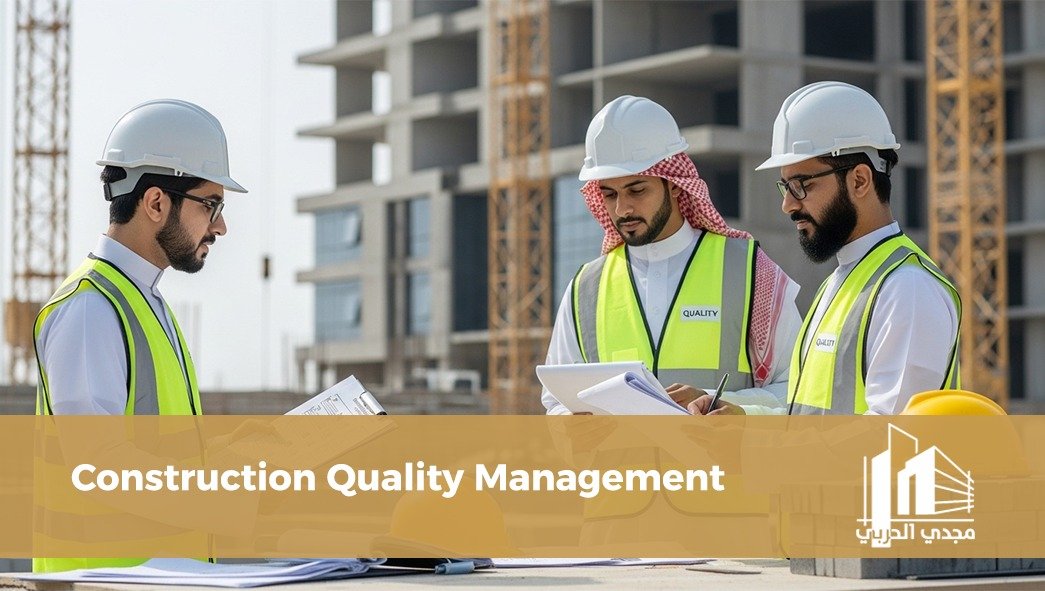
In the construction world, it is common to hear the phrase construction consumes money. However, engineering reality confirms that poor management—not construction itself—is the real consumer of budgets.
Have you ever wondered why some buildings begin to show cracks only a few years after occupancy, while others remain strong for decades? The answer lies in one word: quality.
Quality management in construction projects is not a luxury or a marketing slogan. It is the safety valve that protects your real estate investment from both financial and structural failure.
In this article, we will explore how to control construction quality and link it with a risk management plan to ensure your project is executed according to the highest standards while minimizing hidden costs.
What Is Quality Management in Construction Projects?
Simply put, it is an integrated system designed to ensure that all project stages—from design to handover—comply with approved engineering specifications and technical standards.
Quality in construction does not only mean luxury or high-end finishes. It means compliance—ensuring that what is built on-site matches exactly what was planned in the approved drawings and the Saudi Building Code.
The Importance of Quality Control in Construction
Quality control in construction represents the practical aspect of monitoring labor performance and material usage. Its importance appears in several critical areas:
Long-term cost savings: Discovering an error in foundation reinforcement before pouring concrete costs almost nothing, while discovering it afterward—once cracks appear—can cost enormous amounts.
Project reputation and market value: A building constructed with high-quality standards maintains its market value for many years and becomes easier to sell or lease.
Structural safety: Quality is the primary guarantee for protecting occupants, especially when structural loads and concrete standards are properly implemented.
Major Causes of Poor Quality in Construction Projects
Poor quality usually results from a series of errors across different stages of the project lifecycle. The most common causes include:
Low-skilled labor: Hiring untrained or non-specialized workers for specific tasks leads to technically flawed work that may later require demolition or costly repairs.
Use of low-quality or non-approved materials: Some contractors attempt to reduce costs by using materials that do not meet Saudi Standards (SASO), which often results in cracks, leaks, or early structural deterioration.
Lack of engineering supervision: Leaving the construction site entirely under the contractor’s control without expert inspection often results in execution violations.
Excessive schedule pressure: Attempting to complete a project too quickly may cause workers to skip important technical steps—such as proper concrete curing or sufficient drying time for materials.
Poor coordination between engineering disciplines: Conflicts between architectural, structural, mechanical, and electrical drawings often lead to incorrect improvisations on-site, weakening overall project quality.
How Quality Management Reduces Project Losses
Many project owners assume that strict quality standards increase construction costs. Engineering studies, however, prove the opposite: quality is one of the most effective tools for reducing project losses.
Avoiding rework costs: Discovering technical mistakes after installation—such as improper plumbing or weak concrete mixes—requires demolition and reconstruction, resulting in major financial losses that proper inspection could have prevented.
Maintaining the project schedule: Poor-quality work often forces construction to stop for corrections, delaying project delivery and sometimes causing financial penalties.
Reducing material waste: Quality control ensures materials are used in correct quantities and ratios while preventing damage caused by improper storage or handling.
Lower operational and maintenance costs: Buildings constructed with high-quality standards require fewer repairs during their early years, saving owners significant maintenance costs.
Increasing building lifespan: High-quality construction ensures durability of structural and architectural components, protecting the long-term value of the property.
Stages of Implementing Quality Management in Construction Projects
To achieve the required engineering standards, quality management follows several integrated stages:
1. Quality Planning
This stage forms the foundation of the quality system and involves preparing a technical roadmap before construction begins. It includes:
Defining technical specifications: Selecting material types—such as concrete grades, reinforcement diameters, and insulation systems—according to building codes.
Developing inspection and testing procedures: Determining when and how each structural or architectural element will be inspected.
Setting acceptance criteria: Providing clear technical benchmarks for contractors regarding the minimum acceptable quality level for each stage.
2. Quality Control During Construction
At this stage, quality moves from planning documents to the construction site, where active monitoring ensures compliance with approved designs.
Typical procedures include:
Inspection of materials before site entry: Verifying that materials such as bricks, cables, and pipes match approved samples.
Concrete and steel testing: Performing slump tests and concrete cube tests and verifying steel certification documents.
Monitoring construction work according to drawings: Continuous supervision of workers to ensure compliance with engineering dimensions and elevations.
Documentation of test results: Recording all results in quality logs for future reference or official approvals.
3. Quality Monitoring During Execution
This stage represents the higher-level supervisory process aimed at evaluating overall performance and ensuring continuous compliance with standards.
It includes:
Site inspection visits: Scheduled and surprise inspections conducted by engineering specialists.
Inspection reports: Issuing periodic reports highlighting technical observations, non-conformance reports (NCR), and corrective measures.
Approval of completed work: Preventing progression to new construction phases until the previous phase has been fully inspected and approved.
How Risk Management Protects Construction Projects
Quality and risk management are closely linked. Every quality failure represents a potential project risk.
Therefore, developing a proactive risk management plan helps to:
Identify technical risks: such as potential soil issues or delivery of non-compliant materials.
Develop contingency plans: preparing solutions if material deliveries are delayed or concrete tests fail.
Reduce unexpected problems: proactive risk management ensures the project team is prepared for challenges and prevents sudden project interruptions.
The Role of Engineering Consultants in Ensuring Construction Quality
The consulting engineering firm acts as the technical guardian of quality on behalf of the owner.
At Majdi Al-Harbi Engineering & Safety Consultancy, we implement strict quality control measures including:
Material approval before procurement: ensuring compliance with the Saudi Building Code and SASO certifications.
Continuous on-site supervision: being present during critical stages such as waterproofing, reinforcement works, and concrete pouring.
Review of laboratory tests: verifying soil reports and concrete test results to ensure structural strength and durability.
Tips for Owners to Ensure Project Quality
Project owners can protect their investments by following these practical guidelines:
Do not compromise on technical specifications: ensure that detailed specifications are included in the contractor’s contract.
Link payments to quality verification: contractor payments should only be issued after the consultant confirms that each stage meets quality standards.
Invest in professional supervision: hiring a consulting engineer is essentially an insurance policy against construction errors and financial waste.
Quality management is the difference between a building that serves you for a lifetime and one that becomes a constant maintenance burden.
Are you looking for an engineering team that guarantees the highest quality standards for your next project? Contact Majdi Al-Harbi Engineering & Safety Consultancy to turn your vision into a professionally executed reality.
(FAQ) About Construction Quality
What is the difference between Quality Assurance (QA) and Quality Control (QC)?
Quality Assurance focuses on preventing defects through planning and processes, while Quality Control focuses on inspecting the actual work to ensure compliance with standards.
How does quality affect maintenance costs?
Higher construction quality significantly reduces long-term maintenance costs—sometimes by up to 40% over the building’s lifecycle.
Can quality management be applied in small projects?
Absolutely. Quality management is just as essential for small residential villas as it is for large towers, because engineering principles remain the same regardless of project size.